con·ser·va·tion \känsər-ˈvā-shən\ noun: a
careful preservation and protection of something; especially: planned
management of a natural resource to prevent exploitation, destruction, or
neglect.
con·ser·van·cy \kən-ˈsər-vən-sē\ noun: An
organization (or area) designated to conserve and protect natural resources.
As a professional conservationist, I often see the world in
terms of conservation values. What do I mean by conservation values? These are the specific features,
characteristics, functions, species, and spirit of a place that humans value
and desire enough to protect, and therefore prioritize as an economic value. For example, a scenic vista could be a
conservation value that someone might want to protect from a visual obstruction
such as a transmission tower. Solitude
is a value of the wilderness experience that inspires peace in the soul. There are myriad conservation values that
contribute to our own individual “sense of place,” and that humans see,
experience, and prioritize differently. So, effective conservation programs
must be explicit about the conservation values targeted for protection.
The Tejon Ranch Conservation and Land Use Agreement
(affectionately known around here as the Ranch-wide Agreement or RWA),
conserves 240,000 acres of the Tejon Ranch.
Conservation at Tejon Ranch is via conservation easements, which legally
restrict some of the landowner’s land use rights that are considered
incompatible with preserving and protecting conservation values, while allowing
other compatible land uses to continue.
Under the RWA, conservation easements at Tejon Ranch are structured to
protect seven specific conservation values.
1.
The property supports open space lands
important to maintaining various natural communities. Natural communities are distinct groupings of
plants and animals—for example, oak woodland communities, grassland
communities, or Joshua tree woodland communities. Because of its geographic position at the
junction of four major bioregions in California (Sierra Nevada, Great Central
Valley, Mojave Desert, and South Coast), Tejon Ranch supports one of the
largest diversities of natural communities in California, including many novel
communities that are rare in other parts of the state.
 |
| A unique association of natural communities in Sacatara Canyon: a Mojave Desert Joshua tree, California juniper, piñon pine, rabbit brush, and buckwheat community next to valley oak and foothill pine from the Great Central Valley and Sierran foothills. |
2.
The natural communities and habitats are
largely devoid of significant human alterations, and thus support intact
ecosystem processes on which the communities and species depend. Natural communities depend on ecosystem
processes such as natural wild fires, floods, nutrient cycling in soils, gene
flow between plant and animal populations, predator-prey relationships,
pollination and dispersal of seeds, etc.
Tejon Ranch is large enough and wild enough to still support many of
these processes, and our mission is to ensure that they continue with minimal
alteration from human land uses.
 |
| High flows in Tejon Creek during the winter of 2011. Flooding is an important ecosystem process in stream and riparian communities. |
3.
Tejon Ranch supports all or part of numerous
intact watersheds, which support natural watershed functions and high quality
aquatic, wetland, and riparian habitats. A watershed includes all of the land that
drains to a specific creek, and Tejon Ranch supports a number of individual watersheds. For example, the watersheds of Tejon Creek,
El Paso Creek, Tunis Creek, and Pastoria Creek comprise about 115,800 acres
that all drain to the Great Central Valley.
These watersheds, especially their upper reaches, have not been
substantially altered by roads, been cleared of natural vegetation, or modified
by stream diversions or dams. Intact
watersheds therefore support more natural ecological functions—such as the rate
at which rain infiltrates into the ground or runs off into the stream, or the
amount of soil that is eroded from hillsides and carried downstream—than less
intact watersheds. Natural hydrological functions
tend to support higher quality aquatic, wetland, and riparian habitats. The Conservancy’s mission is to protect, and
enhance where needed, the relatively intact watersheds at Tejon Ranch to
maintain high quality habitats.
 |
| A view from the Blue Ridge into the El Paso Creek watershed. The upper watershed is relatively intact—it has largely natural vegetation cover, with few roads, and no dams or stream diversions. |
4.
The property provides significant regional
landscape connectivity functions, and its protection will ensure that this
function will be maintained and this area and its existing features will be
available for its natural habitat values. Tejon Ranch lies at an important geographic
position between protected private and public lands to the east, south, and
west. Thus it serves as a lynchpin in
the conserved lands network in this region of California. Conserving connectivity allows movement and
dispersal of animals and plants, both within and outside their ranges. Think of a mule deer or black bear trying to
travel from Sequoia National Forest in the Sierra Nevada to the Los Padres
National Forest in the Central Coast Range (see map below), which would be
almost impossible without significant conservation at Tejon Ranch to protect
connectivity functions.
 |
| Public and private conserved land in the Tehachapi region. Conserved lands at Tejon Ranch play a critical role in protecting connectivity functions in the region. |
5.
The property supports diverse flora and
fauna dependent on its high quality natural communities, functional watersheds,
intact ecosystem processes, and landscape connectivity. Protection of the property also helps support
numerous other species dependent on its habitats, food resources and water
supplies. The amazing geology
and diversity of vegetation communities result in the high biodiversity of
plant and animal species. With the help
of our partners and citizen scientists, we have documented nearly 1,000 plants,
over 250 birds, over 40 reptiles and amphibians, and over 40 mammal species on
the Ranch, including over 60 special status species (species of conservation concern).
 |
| Some species found at Tejon Ranch (clockwise from upper left): American badger, ringneck snake, Tehachapi slender salamander, alkali mariposa lily, Vasek’s clarkia, and Bakersfield cactus. |
6.
The property contains scenic resources, and
the protection of the property will provide a significant public benefit by
preserving open space against development pressure and will protect scenic
qualities unique to the area.
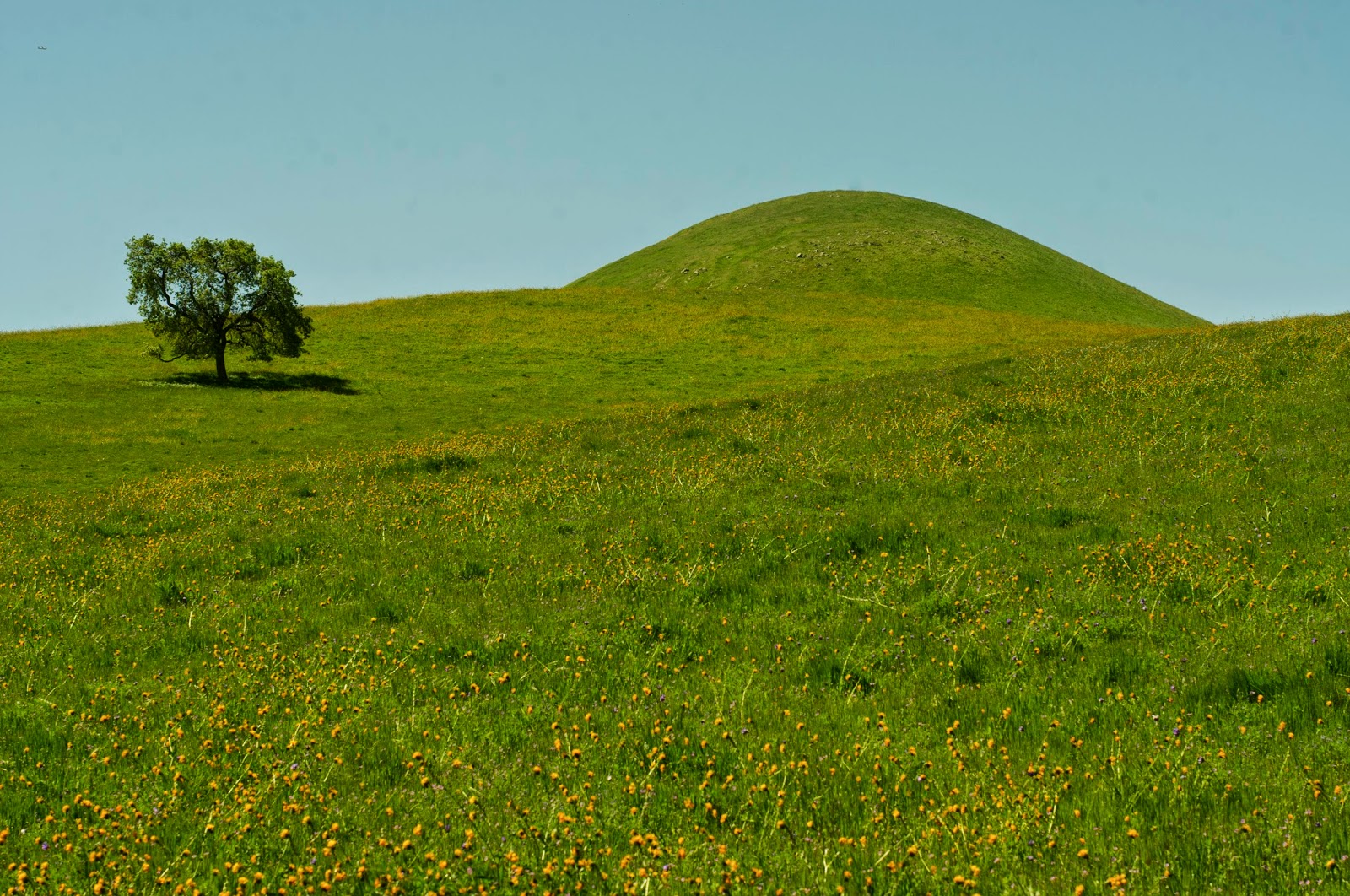
What can I say? Tejon Ranch is a
beautiful place and we want to keep it that way!!
 |
Wildflowers among Joshua trees in the Antelope Valley.
|
 |
Buttercups in the upper El Paso Creek watershed.
|
7.
The property contains important cultural and
historic resources, and the protection of the property will provide a
significant public benefit by ensuring the preservation of these resources. Tejon Ranch supports an important cultural
and historic heritage. It was long
occupied by several Native American tribes, who likely shaped its landscape
with their management practices. The
Tehachapi Mountains and Tejon Ranch were visited by a number of California’s
early explorers and scientists, including Fremont, Carson, Xantus, Williamson,
Engelmann, Grinnell, Jepson, and Twisselman, who helped uncover its secrets. The Conservancy is now partnering with other
scientists and naturalists to help us to continue explore and interpret this
heritage and share it with the public.
 |
| Numerous buildings and infrastructure remind us of the long human history in this region. |
The Tejon Ranch Conservancy is legally obligated to protect
these conservation values at Tejon Ranch and to enhance them where warranted
and feasible. We are also charged with
and have the pleasure of sharing them with you.
So next time you pay a visit to Tejon Ranch, think about what you value
most about this incredible place, and then come back and help us protect and
enhance it!